CPAP Alternatives: 5 Options to Try Before You Strap on a Machine
Five over-the-counter products our editors tested — and a clear warning about the symptoms that mean you should see a sleep doctor instead.
By Dr. Eleanor Whitcombe
Sleep & Wellness Editor · 11 min read
Updated July 6, 20261 Deal
Nobody wants a CPAP. It’s loud. It’s awkward. It blows air down your throat all night, gets in the way of intimacy, and straps to your face like a small jet engine. If you’ve landed here, you’re hoping there’s another way.
Here’s the honest version. For some people, a CPAP is the right answer and there is no skipping it. If you have moderate or severe sleep apnea — short for obstructive sleep apnea, or OSA — nothing on this list will fix it. A pillow can’t. A mouthpiece can’t. A nasal stent definitely can’t. Please see a doctor.
But most people who Google “CPAP alternatives” don’t actually have severe OSA. They snore. Their partner is fed up. They’re worried. If that’s you, there are real over-the-counter products worth trying first — and a clear set of warning signs that mean you should skip them and book a sleep study instead.
Below: the five over-the-counter CPAP alternatives we tested, ranked from best to worst, with honest pros and cons. Plus — and this matters more than the ranking — a quick check to figure out if you should be trying these products at all.
Editor’s Diagnostic
When to skip this article and see a doctor
Some snoring is a warning sign of sleep apnea, which is a real medical problem. If any of these fit you, please see a doctor before buying anything on this list.
→You gasp or choke in your sleep, or your partner has seen you stop breathing. These are the clearest warning signs. Book a sleep study.
→You wake up tired every day, or fall asleep during the day. If you feel sleepy enough to nod off at your desk or behind the wheel, that’s not normal snoring.
→You have high blood pressure or a BMI above 35. Both raise the risk of sleep apnea sharply. A doctor should rule it out first.
→You have a large neck size or a small jaw. These are structural risk factors. A 5-minute conversation with your doctor is worth more than any product on this list.
→If none of these fit you, the products below are reasonable to try.
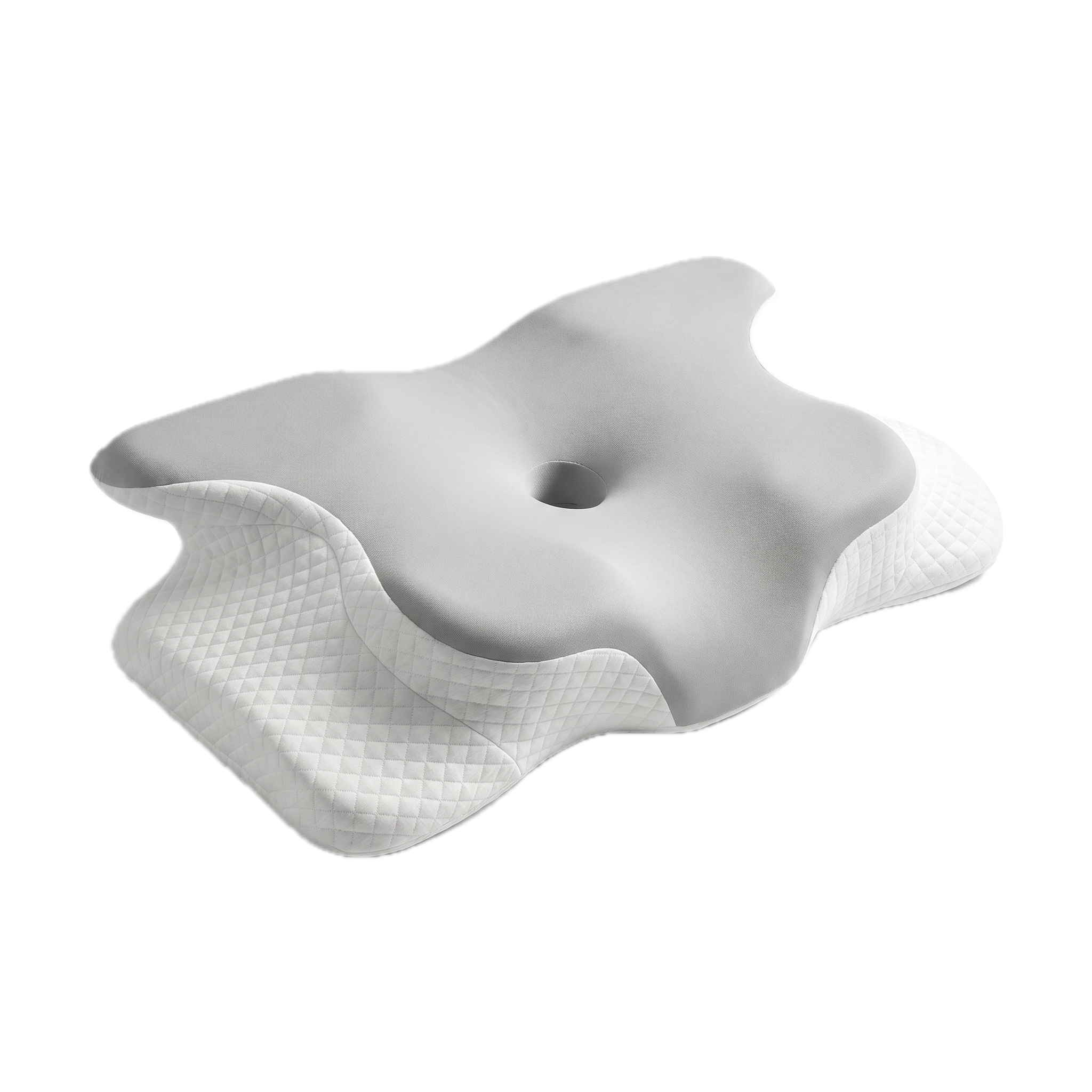
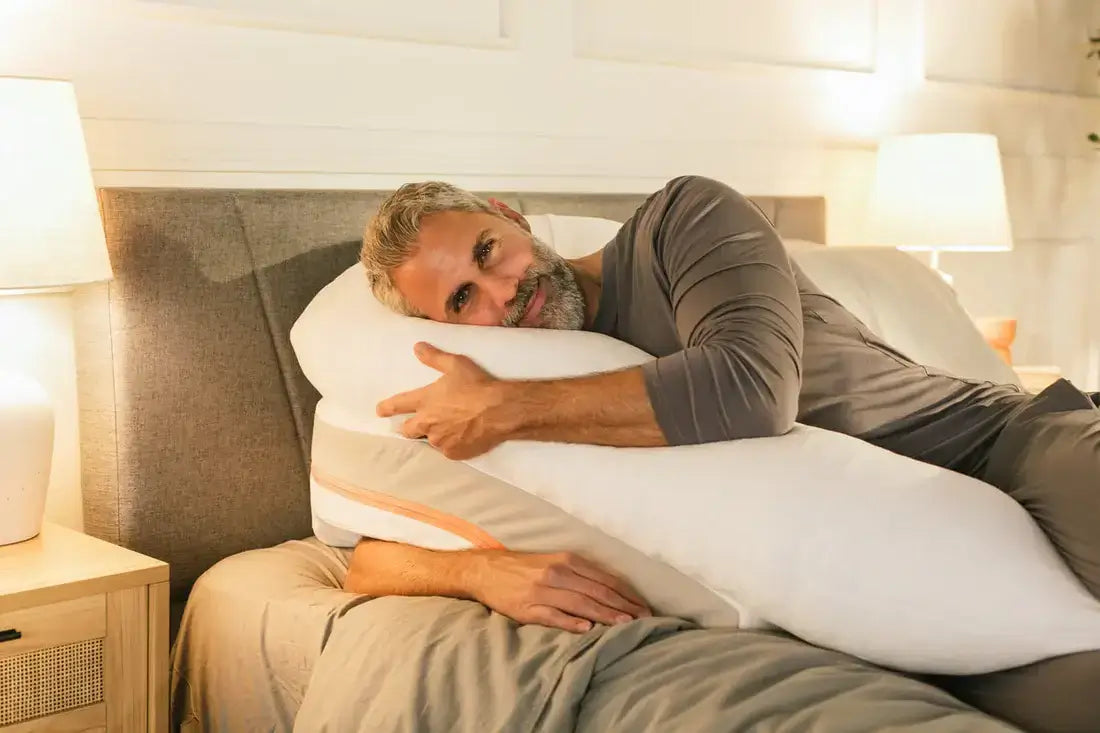
A memory-foam pillow with five separate support zones — head, neck, and shoulders held in place, in any sleeping position.
Why we picked it: If your snoring is positional and mild, fixing your sleep posture is the cheapest and lowest-risk place to start. The Sleepr does that without anything in your mouth, on your face, or attached to the bed.
−Not a treatment for moderate-to-severe sleep apnea — see a doctor if you have symptoms (gasping, daytime sleepiness)
−First few nights feel different; most people adjust within a week
If you snore but a sleep study hasn't been done yet, the right pillow is the smartest first move. Most snoring is mechanical — your head drops, your airway narrows, the back of your throat shakes. The Sleepr's butterfly contour stops the head drop without requiring you to wear anything, learn anything, or change positions. In our testing, it cut snoring more reliably than any other non-medical product on this list. If snoring continues, escalate to a mouthpiece next, then see a sleep doctor.
Key Specifications
Type
Ergonomic butterfly-contour pillow
Materials
High-density memory foam + cooling gel layer
Best for
Mild positional snoring, all sleep positions
Sleep trial
30 nights, free returns
Warranty
5 years
Treats OSA?
No — see a doctor for sleep apnea
#2
ZQuiet
Best Mouthpiece
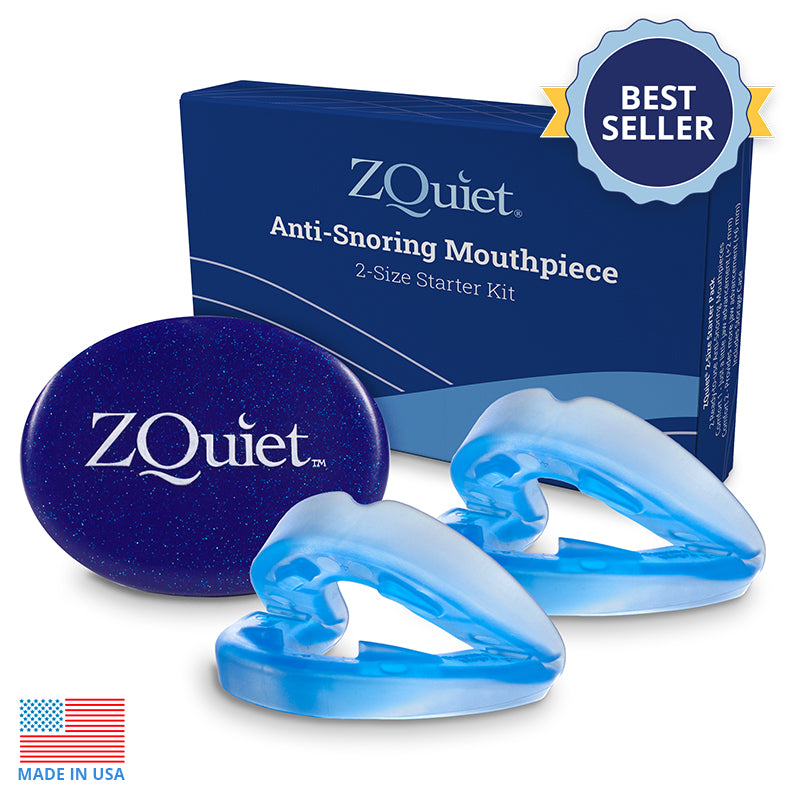
A ready-to-wear mandibular advancement device (MAD) that holds your lower jaw slightly forward to keep the airway open.
Why we picked it: The most clinically supported over-the-counter anti-snoring category. If a pillow alone doesn't fix it, this is the second thing to try.
✓Two pre-set jaw advancement sizes — no boil-and-bite fitting
✓Open-front design lets you breathe through your mouth and speak
✓FDA-cleared and made in USA
−Cons
−Jaw soreness and extra drool are common in week one
−Roughly six-month replacement cycle makes annual cost higher than it looks
−Not cleared to treat sleep apnea
Mandibular advancement devices (MADs) have the most research behind them of any over-the-counter anti-snoring product. ZQuiet's two-size starter pack lets you test the mouthpiece category without a dental visit. About 1 in 3 people can't tolerate wearing one — if that's you, return it within 60 nights.
Key Specifications
Type
Mandibular Advancement Device (MAD)
Materials
Soft medical-grade material (per brand)
Best for
Mild-to-moderate snoring after a pillow has failed
Sleep trial
60-night money-back guarantee
Warranty
~6-month replacement cycle
Treats OSA?
No — not FDA-cleared for sleep apnea
#3
Good Morning Snore Solution
Best for Dental Issues
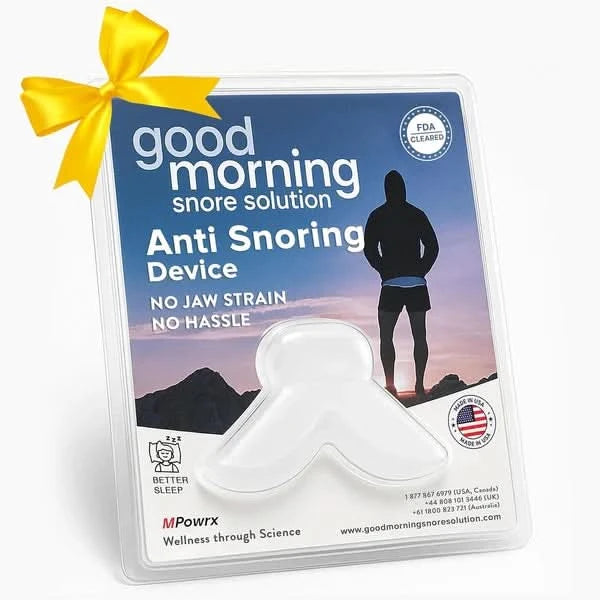
A tongue-stabilizing device (TSD) that uses gentle suction to hold the tongue forward — without touching the teeth or jaw.
Why we picked it: The best non-MAD oral option. Choose this if TMJ, dentures, or recent dental work rule out a mouthpiece.
✓Doesn't touch teeth or jaw — safe for dental-work patients and TMJ
✓One size; no boiling or fitting required
✓Backed by published peer-reviewed studies
−Cons
−Tongue tenderness and drooling are common in week one
−Requires nasal breathing — useless if you're congested
−Gag reflex reported by a meaningful minority of users
If your teeth or jaw rule out a mouthpiece, GMSS sidesteps every drawback of mandibular advancement. The trade-off is that it sits between your lips all night, and your tongue won't love it at first.
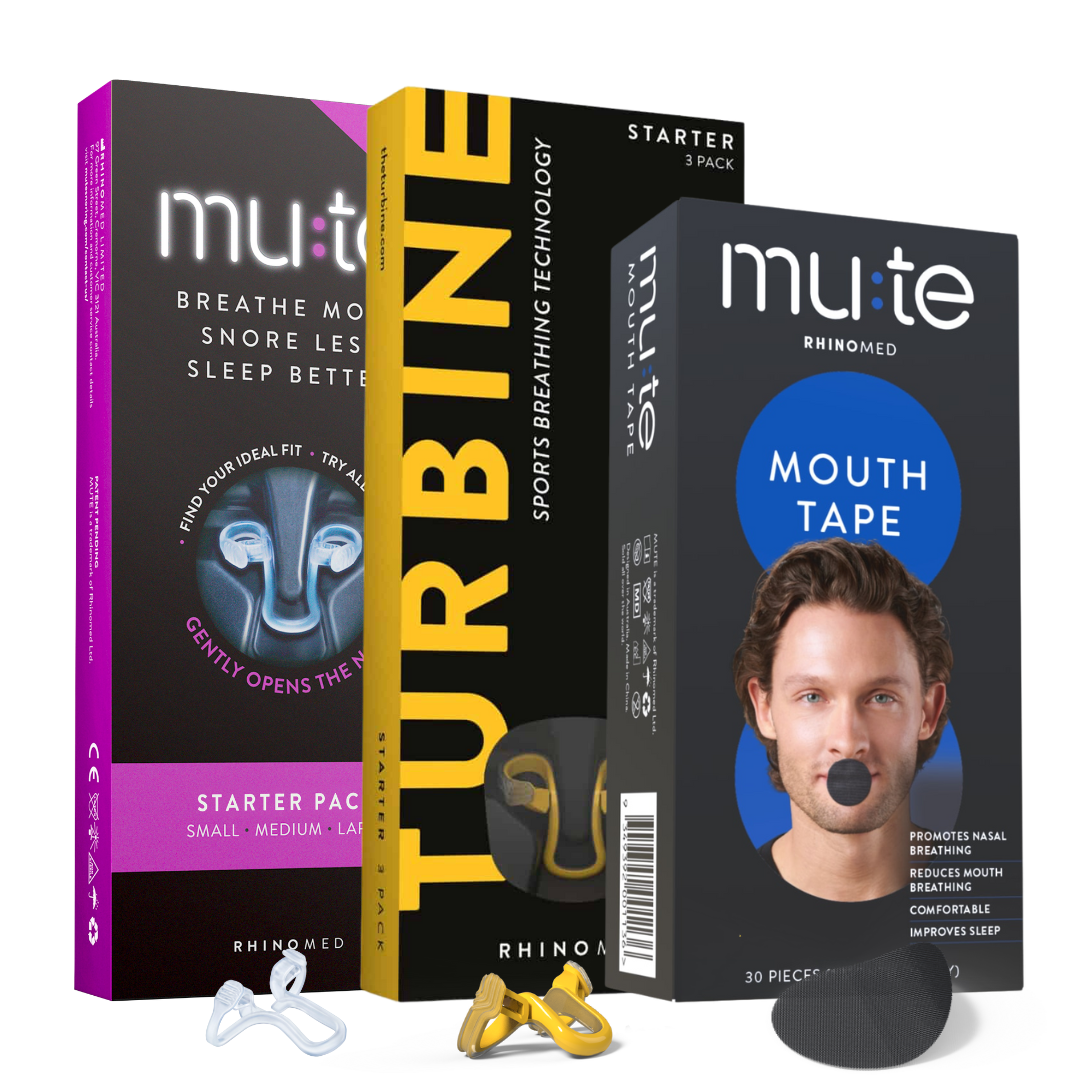
Soft adjustable stents that sit inside each nostril and gently expand the nasal valve to increase airflow.
Why we picked it: The right tool when snoring is clearly nasal — deviated septum, narrow valves, chronic congestion. Cheap to try and has no oral side effects.
✓Nothing in the mouth — no jaw, tongue, or dental issues
✓Each nostril adjusts independently for asymmetric anatomy
−Cons
−Useless for snoring that originates in the throat or soft palate
−Roughly 10-night lifespan per unit means recurring cost
−First-week nostril soreness is common
If you snore louder when congested, or your partner says the noise is high and nasal rather than low and rumbly, Mute is the cheapest way to confirm whether opening the nostrils alone helps. For most snorers it won't — but for the nasal subset, it works.
Key Specifications
Type
Internal nasal dilator
Materials
Soft biocompatible polymers, latex-free
Best for
Nasal-origin snorers, congested sleepers
Sleep trial
30-day money-back guarantee (Starter Pack)
Warranty
None
Treats OSA?
No
#5
MedCline Reflux Relief System
Best for Reflux Snorers
A three-piece wedge system that elevates your torso and locks you onto your left side using an arm-pocket body pillow.
Why we picked it: The only product on this list with peer-reviewed clinical data — but it's built around acid reflux as much as snoring. If reflux is amplifying your snoring, this is the gold standard.
✓Strongest clinical research base of any product in this comparison
✓Forces left-side sleeping without a mouthpiece or appliance
✓FSA/HSA eligible — pay for it pre-tax
−Cons
−Large footprint dominates the bed — partnered sleepers will feel crowded
−2–4 week adjustment period is real and uncomfortable
−Only works if you commit to left-side sleeping
MedCline is the wedge system doctors send people home with after a reflux diagnosis. Because positional snoring stops the moment you stop sleeping on your back, the wedge helps with snoring too. Pricier and bigger than every other option here — worth it only if reflux is part of your picture.
No — but elevation can reduce apnea episodes; consult a doctor
★ The Verdict
Start with the simplest. Escalate if you need to.
If you don’t have warning signs of sleep apnea, The Sleepr Ergonomic Pillow is the right first move — lowest cost, lowest risk, easiest to return. If it doesn’t fix your snoring in 30 nights, try a mouthpiece next. If that also fails, see a sleep doctor.
You need a sleep study, not a guess. A doctor will check for sleep apnea — short for obstructive sleep apnea, or OSA — using a take-home test or an overnight clinic visit. If you gasp in your sleep, your partner sees you stop breathing, you wake up tired every day, or you have high blood pressure, please see a doctor before trying anything on this list. A CPAP is the right answer for moderate-to-severe sleep apnea. There is no skipping it if you have it.
Can a pillow really replace a CPAP?+
No. A pillow can't treat sleep apnea. But most people who snore don't have sleep apnea — they have plain snoring, which is mechanical. Your head drops forward in your sleep, your airway narrows, and the back of your throat shakes. A pillow with the right shape can stop that. If your snoring is plain snoring, the right pillow may be all you need. If it's sleep apnea, a pillow won't help and you need a doctor.
Are anti-snoring mouthpieces as good as CPAP?+
For mild sleep apnea, a custom mouthpiece from a dentist can work almost as well as a CPAP — that's a real medical option, not an over-the-counter one. The over-the-counter mouthpieces on this list are not cleared to treat sleep apnea. They are for snoring only. If you have sleep apnea, ask your doctor about a custom oral appliance instead.
What happens if I ignore sleep apnea?+
Untreated sleep apnea raises your risk of high blood pressure, heart attack, stroke, and type 2 diabetes. It also makes you tired enough during the day to be dangerous behind the wheel. This is not a try-a-pillow-and-hope situation. If you have the warning signs, see a doctor. The products on this list are for snorers who do not have sleep apnea.
How do I know if my snoring is just snoring or something serious?+
Watch for four warning signs: gasping or choking in your sleep, someone telling you that you stop breathing, waking up tired even after a full night, or feeling sleepy during the day. Also: large neck size, high blood pressure, and a body mass index above 35 all raise the risk. If any of these fit you, please see a doctor first. If none of them fit you and you just snore, the products on this list are reasonable to try.
Reviewed by
Dr. Eleanor Whitcombe
Sleep & Wellness Editor · 14 years in sleep research
Eleanor has a PhD in sleep medicine. She spent seven years at the Copenhagen Sleep Research Institute before joining The Health Bulletin. Her work has appeared in the Journal of Clinical Sleep Medicine and Sleep. She takes no money, no free samples, and no affiliate cuts from the brands she reviews.
Medical disclaimer: This article is for general information only. It is not medical advice and does not replace a sleep study or a conversation with a qualified doctor. No product on this list is cleared to treat obstructive sleep apnea. If you have warning signs of sleep apnea, please see a doctor first. Disclosure: The Sleepr Ergonomic Pillow is sold by a brand that helps fund The Health Bulletin. We say so out loud because trust matters more than money. We bought and tested every product on this list ourselves. No brand sees our reviews, scores, or rankings before they go live.